
Udaipur: Water, Weather, and Ornament
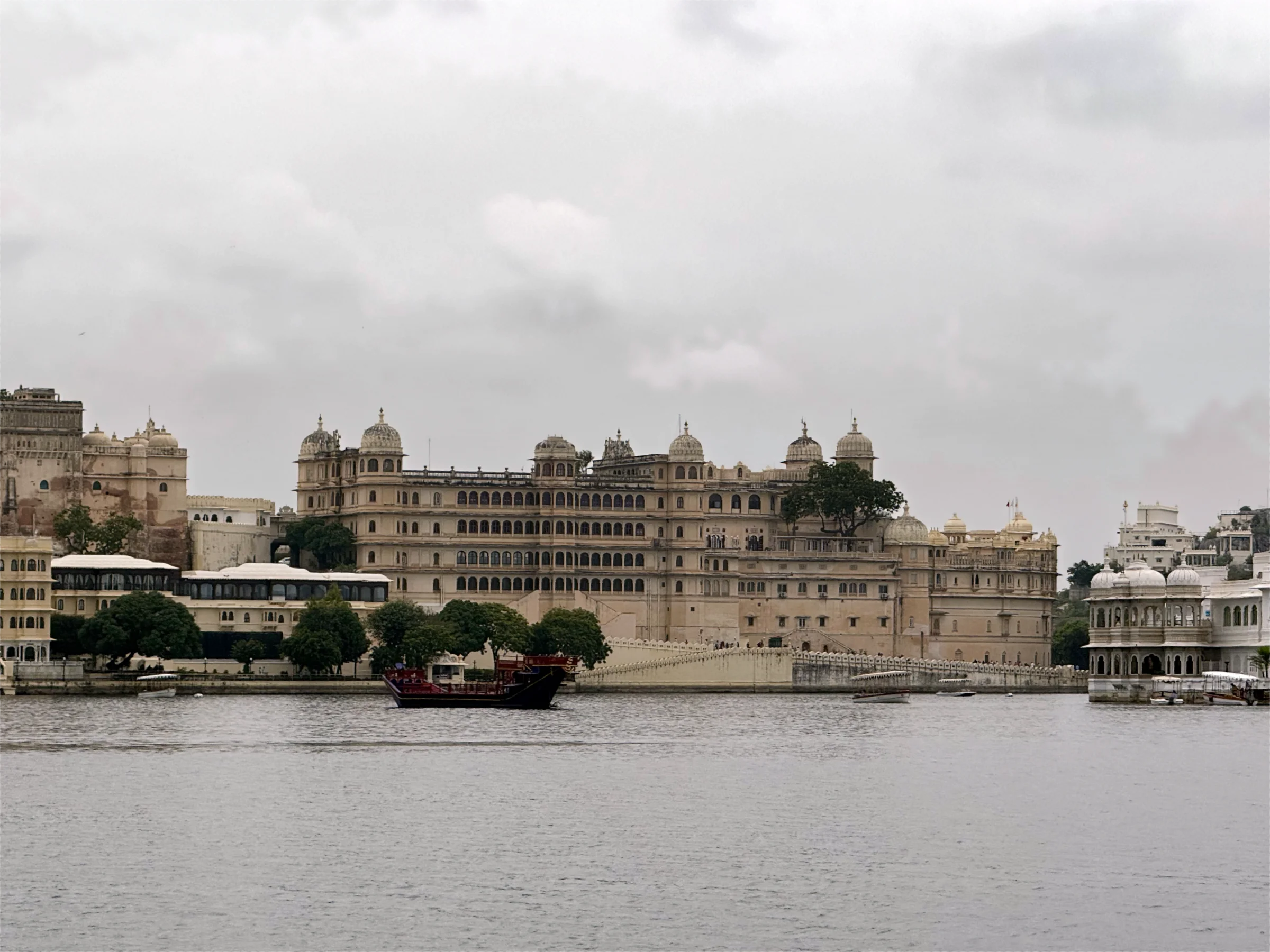
Udaipur first appears as a city held together by water. Across Lake Pichola, buildings gather at the edge: pale façades, terraces, domes, boats, and the slow movement of people between them. The lake is not simply a view from the city. It is the space through which the city becomes legible.
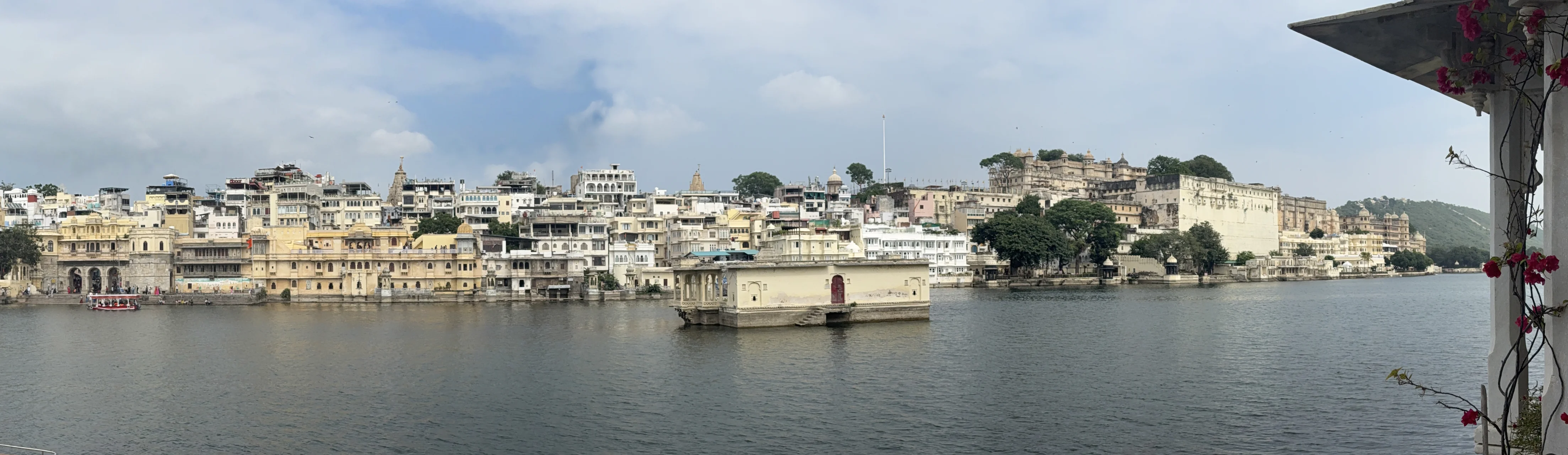
At the waterline
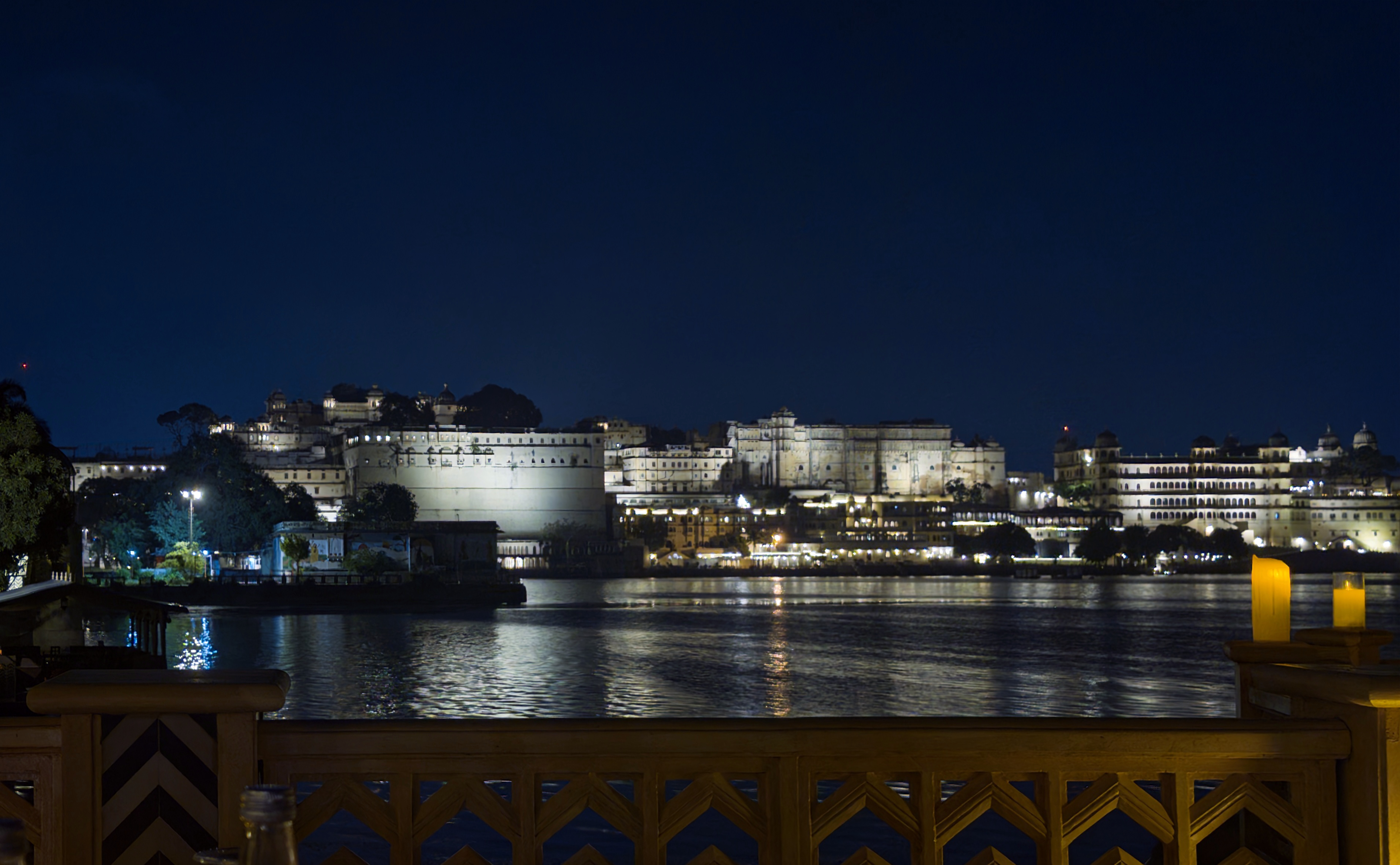
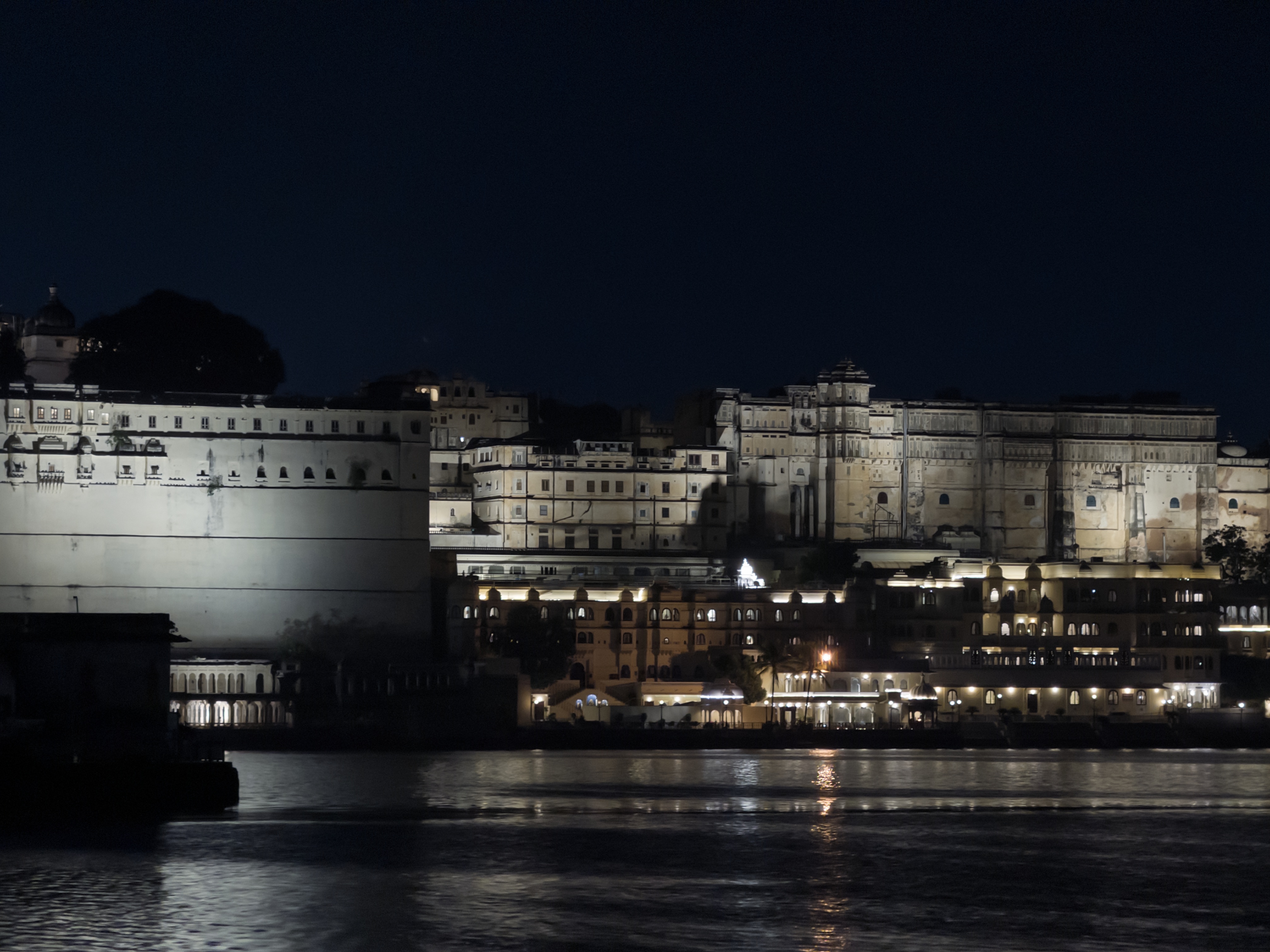
At night, the water turns the city into a field of reflections. Individual buildings recede; their lit edges become a loose, temporary skyline. The city is both more theatrical and less certain.
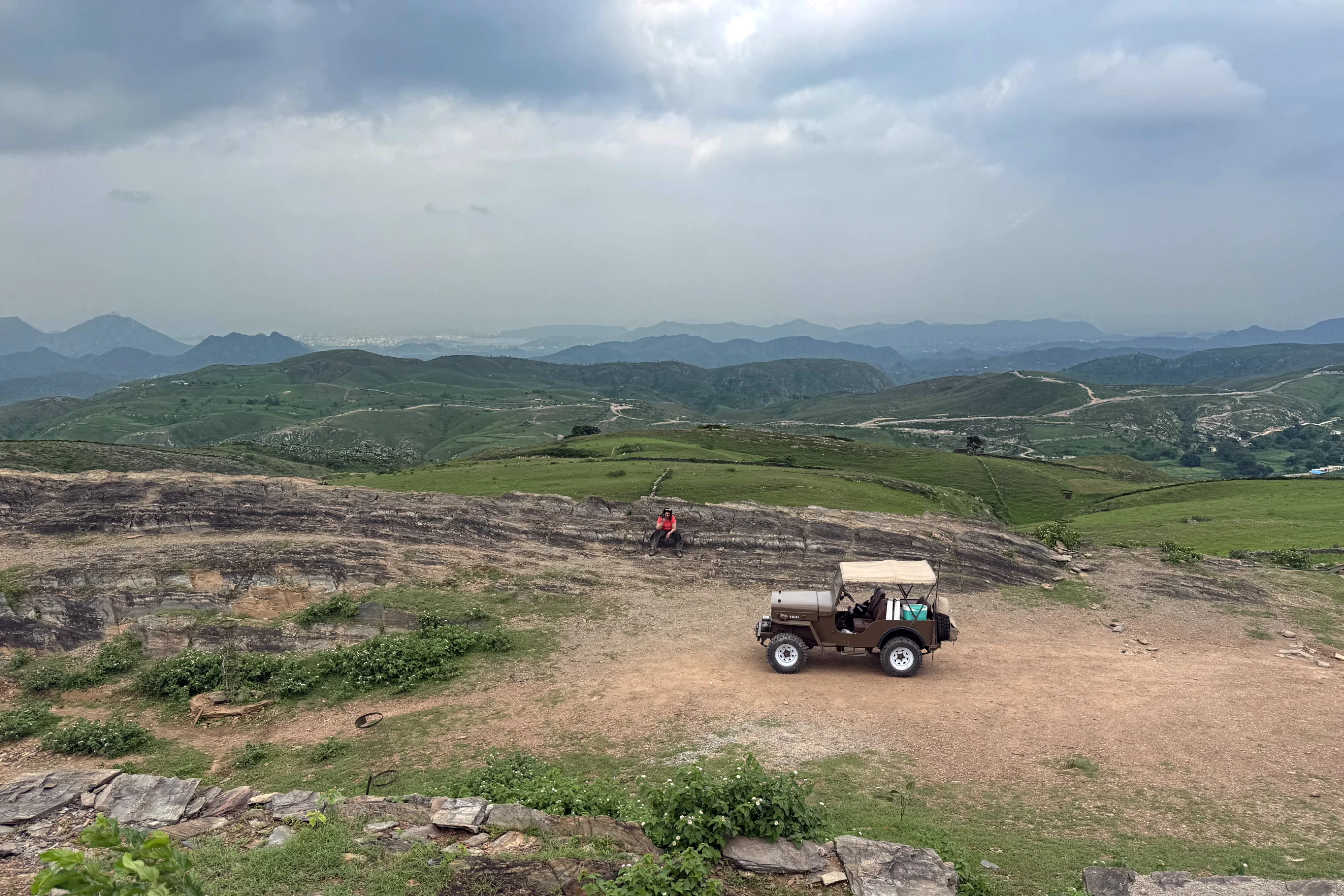
Away from the centre, the landscape changes the scale of the place. The enclosing hills are never very far away; the lake, roads, scrub, and sky make a wider terrain around the ornate city.

Street and façade
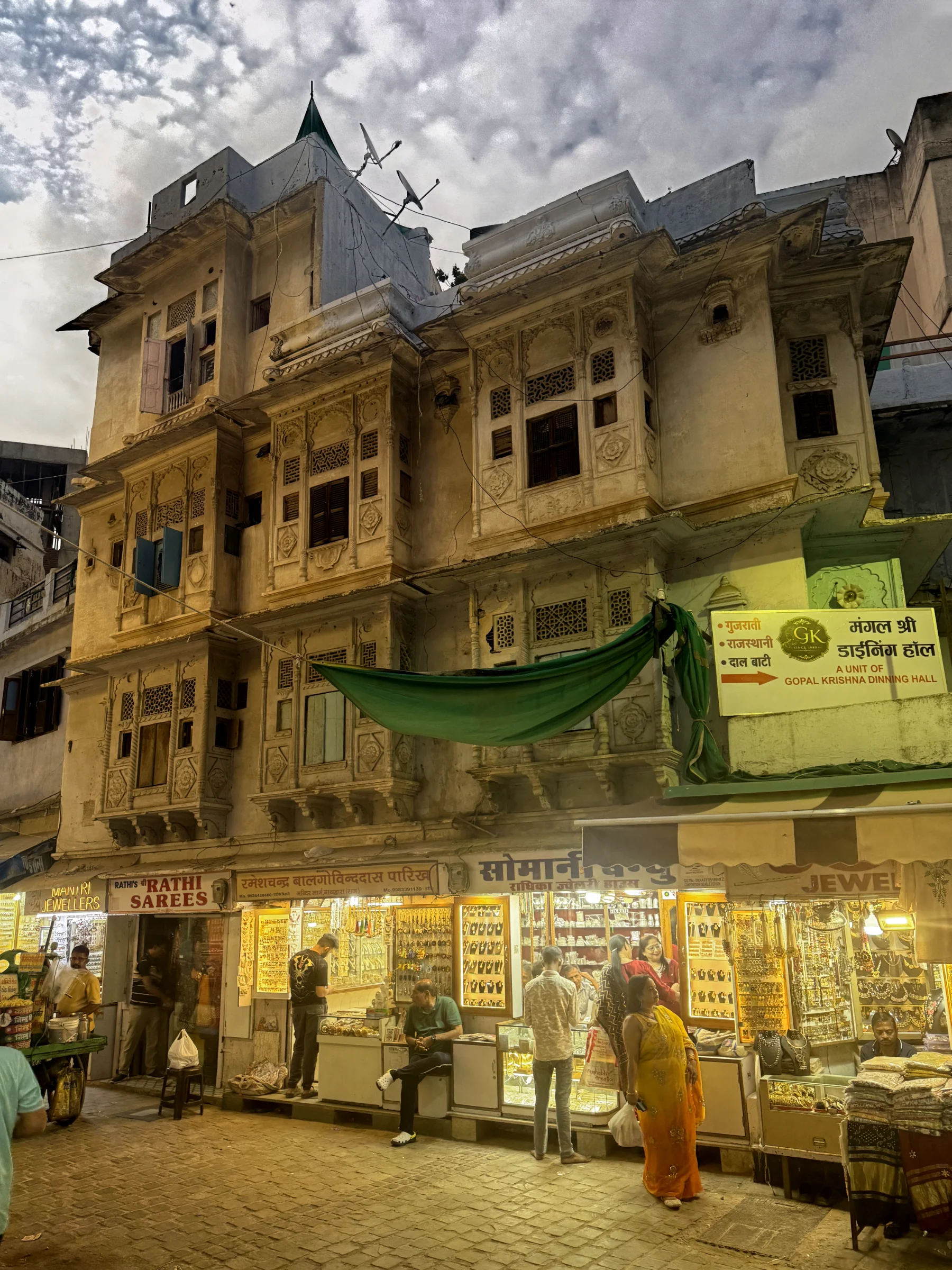
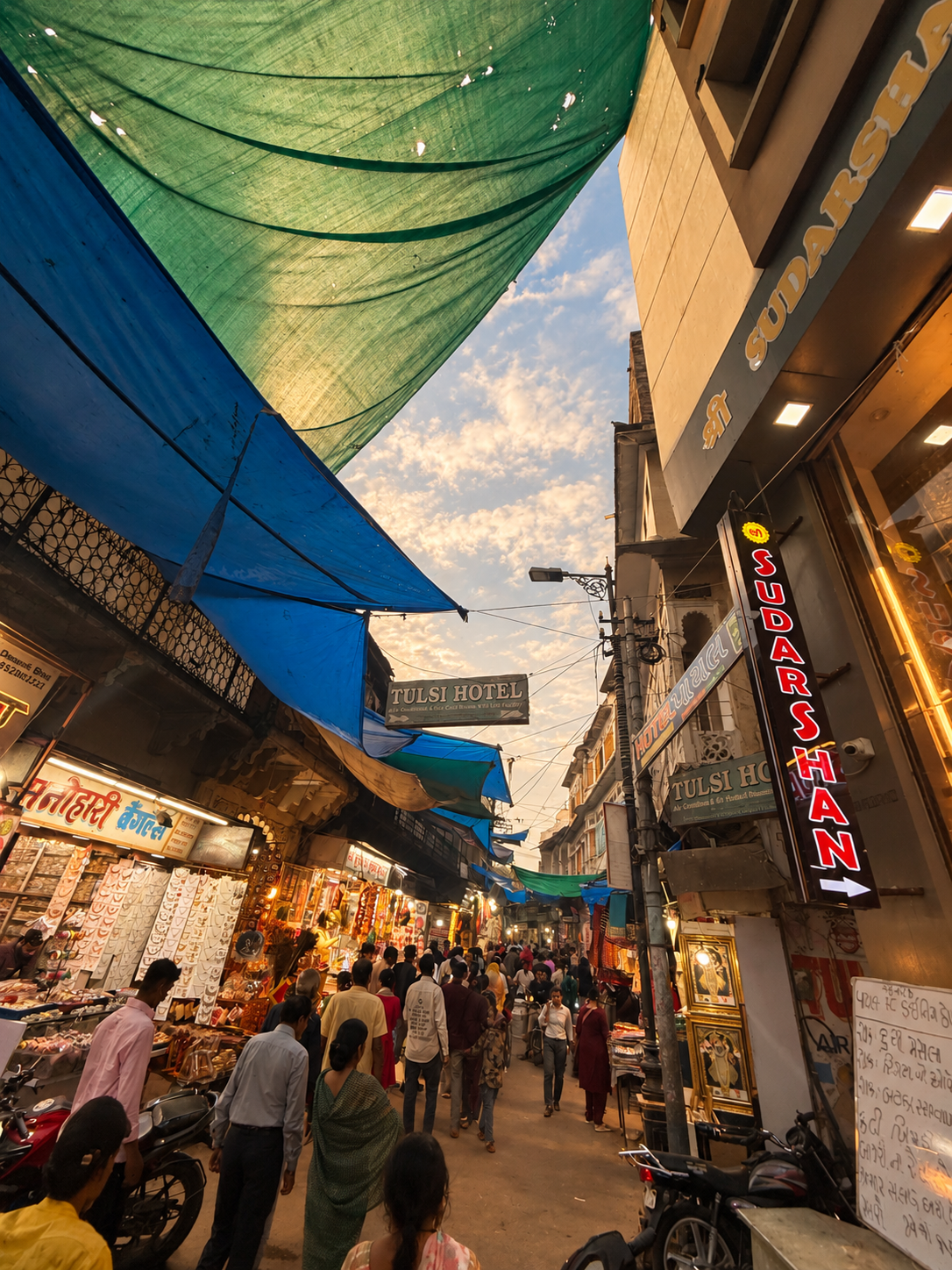
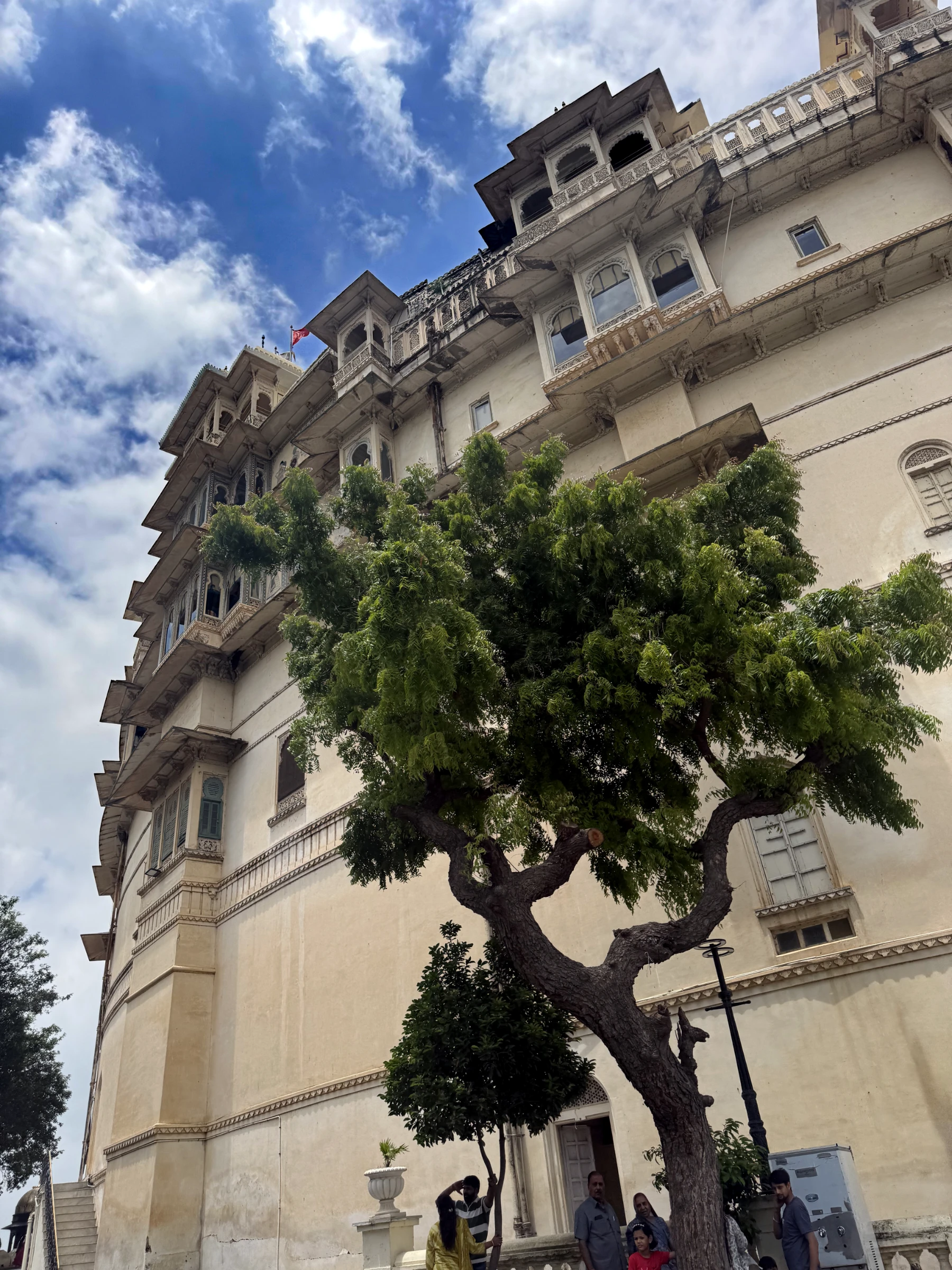
The city’s texture is clearest on foot. Monumental silhouettes give way to shaded lanes, ageing shopfronts, improvised awnings, and buildings that are continually adapted by the work taking place beneath them.
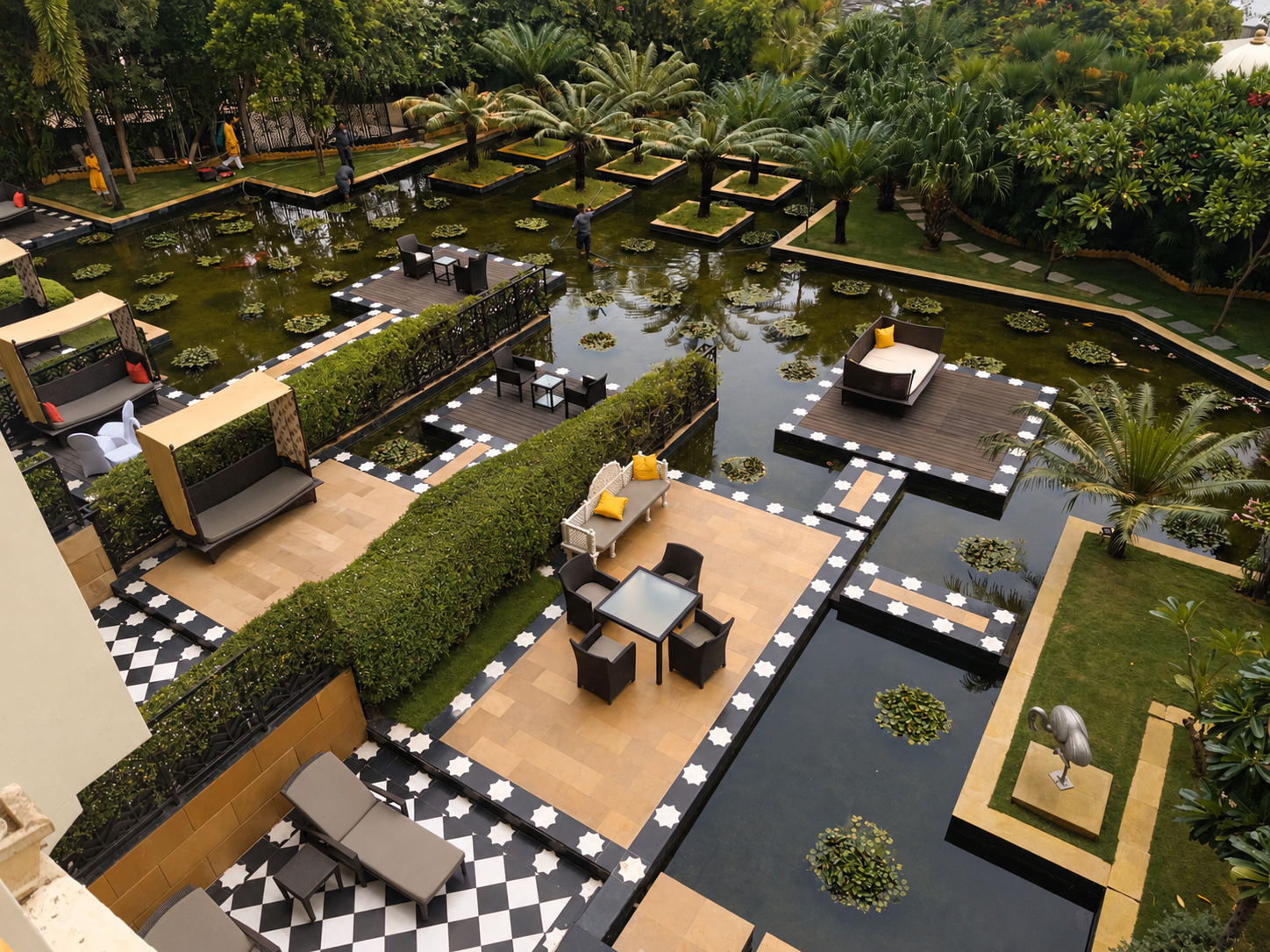
Rooms of ornament
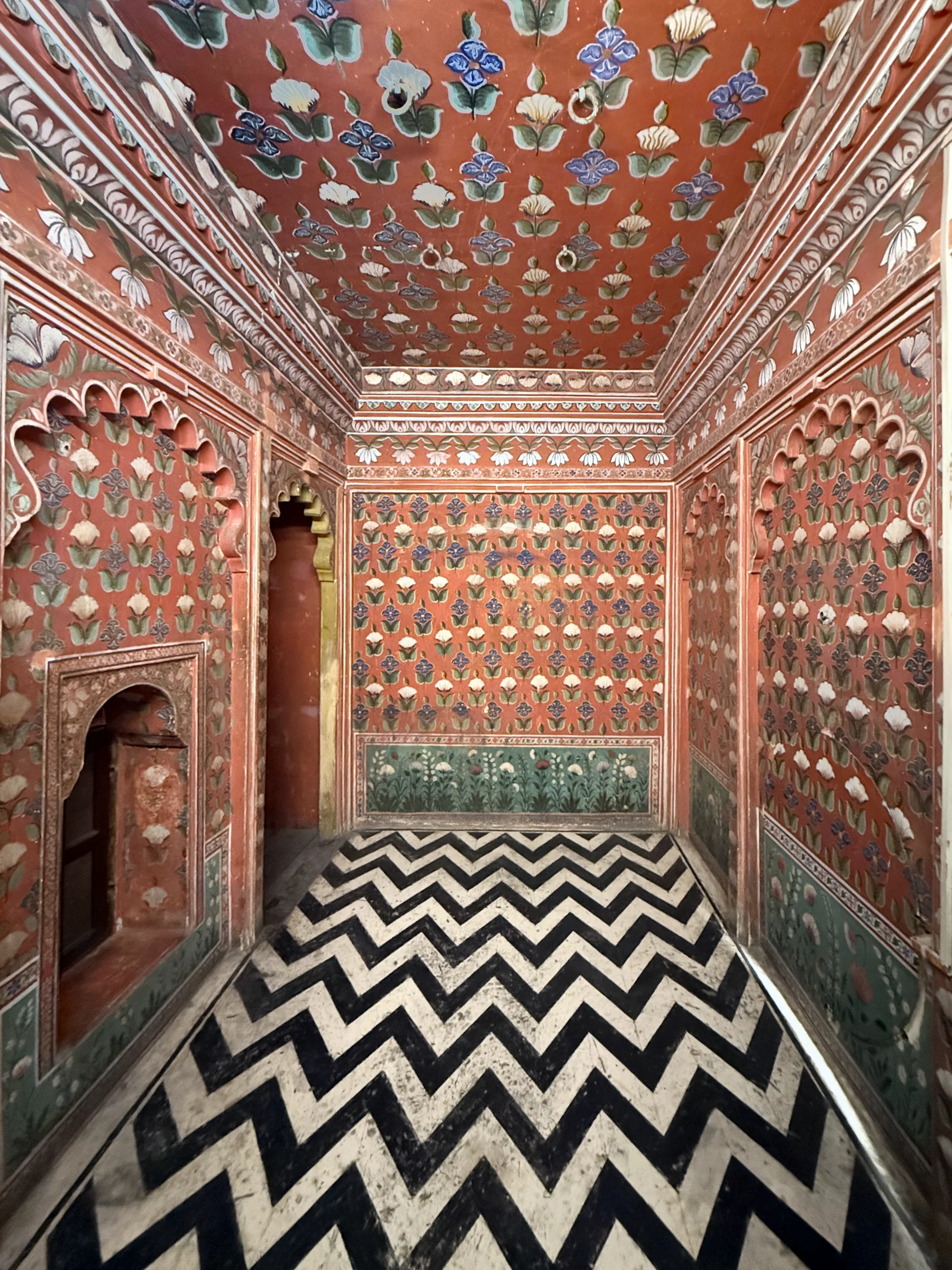
Inside, the city is different again: dense rather than expansive, made of painted surfaces, framed openings, and patterned floors. Water and weather may organise Udaipur from afar; up close, it is ornament that holds the eye.
