
From Living Knowledge to Archaeological Object
Architecture does not begin as an object.
Before it becomes something that can be photographed, measured, catalogued, preserved, or exhibited, it exists as a set of relationships being continuously enacted. A wall has a thickness because something depends upon that thickness. A courtyard has a proportion because something happens within it. A threshold has a position because movement, privacy, visibility, climate, ritual, or social distinction requires that position to be maintained. A material is selected because it must perform under particular conditions. A construction sequence follows an order because labour, season, material behaviour, and obligation make some sequences more viable than others.
The building is the visible consequence.
The knowledge that produces and sustains it is distributed elsewhere.
It resides partly in the builder who knows how much a wall can deviate before it fails; in the inhabitant who knows when a courtyard becomes tolerable; in the custodian who knows when a surface requires repair; in the ritual specialist who knows when construction may appropriately begin; in the community that knows which threshold may be crossed and by whom. None of these forms of knowledge is necessarily contained within the building as an object. Yet without them, the building does not fully exist as the architectural system it once was.
Architecture leaves material evidence, and this makes the distinction easy to lose.
Stone remains after memory has thinned. Walls remain after the practices that organised their occupation have changed. Courtyards remain after the rhythms that once activated them have been interrupted. Proportions remain after the rules through which they were generated cease to be explicitly transmitted. A building can therefore survive materially while the knowledge through which it once operated becomes progressively less accessible.
This gap is where the archaeological relation matters most.1
Not when a building becomes old. Age alone does not produce archaeology. Nor does becoming archaeological necessarily mean that a building ceases to be inhabited, worshipped in, maintained, or changed. The same building can participate in several relationships at once: it can remain a place of use while also becoming evidence for a historian, protected fabric for a conservation authority, a measured object for a surveyor, or a monument for the state.
What changes is not necessarily the building.
What changes is the relation through which it becomes knowable.
An inhabited house, for instance, is not merely a building containing people. It is a continuing negotiation between space and use. Thresholds are adjusted. Openings are enlarged. Surfaces are repaired. Rooms change function. Patterns of movement alter in response to climate, family structure, economic necessity, or social expectation. The building and its inhabitants participate in one another.
Approached archaeologically, the same building enters another relation. Its fabric becomes evidence from which earlier conditions are reconstructed. Dimensions become measurable facts. Alterations become chronological clues. Materials become evidence of construction. Surfaces become traces.
Neither relationship is necessarily more truthful than the other.
But they make different kinds of knowledge available.
In use, a building teaches through practice. As evidence, it teaches through what remains.
Historically, one relation may become dominant over another. A building may continue to be occupied even as its institutional identity increasingly becomes that of monument, archive, precedent, or heritage object. Conversely, a structure abandoned by its original users may retain enough material evidence to support remarkably detailed reconstruction of how it once worked.
This movement does not require physical destruction. In many cases, buildings survive precisely because they have been stabilised as objects.
Conservation protects fabric. Documentation fixes dimensions. Photography preserves appearance. Measured drawing establishes geometry. Classification assigns type and period. Interpretation locates the building within a historical sequence. These practices are indispensable. Without them, much architectural evidence would have disappeared entirely.
Yet preservation also changes what the building is available to reveal.
The more precisely dimensions are fixed, the easier comparison becomes. The more consistently appearance is stabilised, the more readily architecture can circulate as an image. The more successfully fabric is isolated from alteration, the more clearly material form can be studied.
What becomes clearer is the object.
What can become less accessible is the operation.
This is the documentation paradox.
Colonial architectural documentation in India demonstrates it particularly clearly. The problem was not an absence of observation. Many surveys recorded buildings with extraordinary precision. The asymmetry lay in what such observation could establish. A survey could record a wall, but not necessarily the accumulated judgement through which its thickness became appropriate. It could record a courtyard, but not the daily and seasonal occupation through which its environmental capacity became usable. It could record the finished structure without preserving the entire network of labour, maintenance, obligation, adjustment, and transmission through which the structure remained operative.
The distinction is not between accurate and inaccurate documentation.
It is between recording an outcome and recovering the conditions that generated it.
A measured drawing can tell us that two walls are three metres apart. It cannot, by itself, tell us why that distance was appropriate. A photograph can establish the position of a threshold. It cannot establish the sequence of actions through which that threshold became socially or operationally significant. A section can show the vertical relationship between rooms. It cannot, by itself, reconstruct how occupation moved between those rooms over a day or a season.
The missing knowledge is not hidden somewhere behind the drawing.
It is distributed across relationships and across time: between drawing and building; between building and use; between use and maintenance; between one generation and the next.
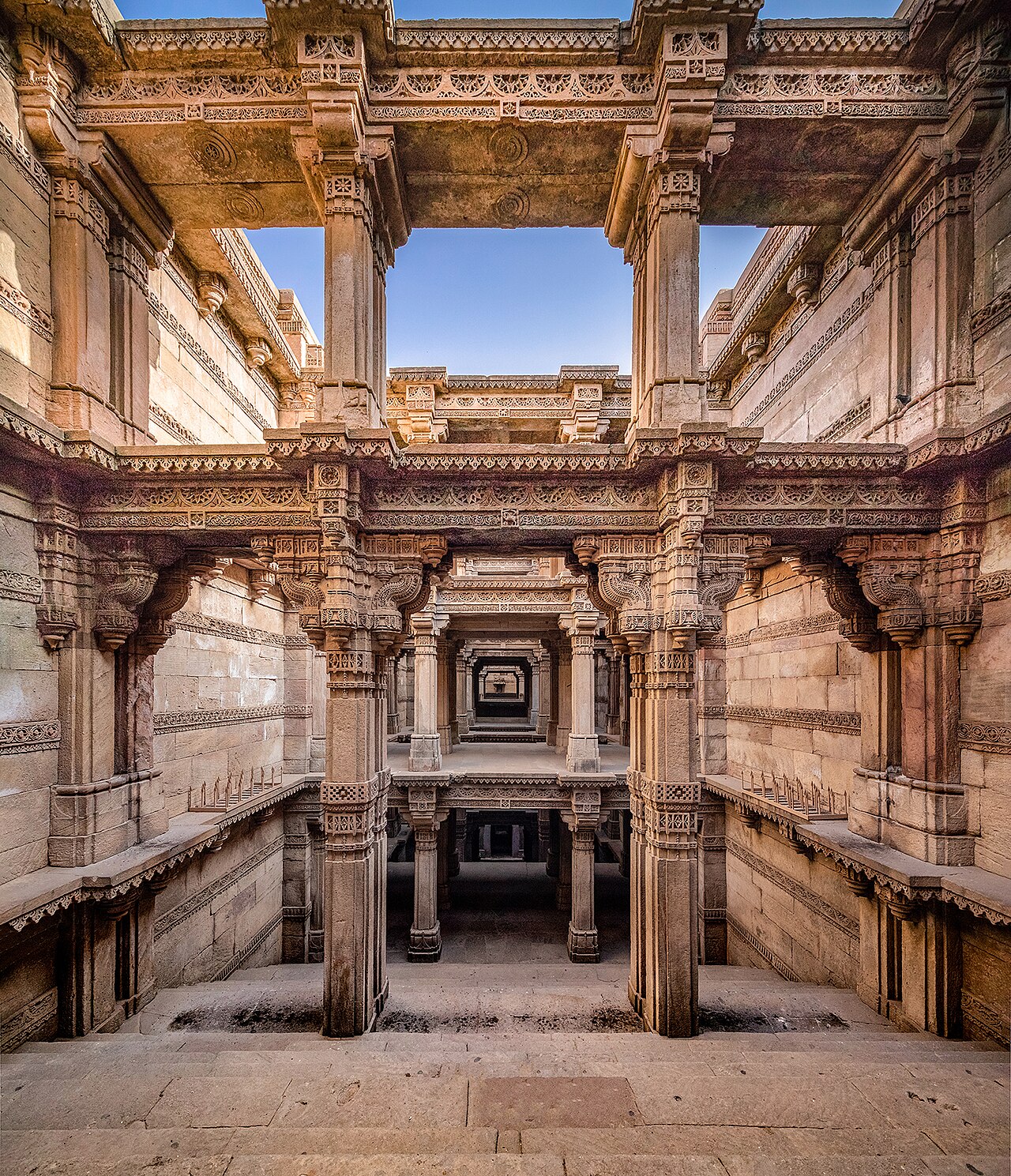
Consider Adalaj Stepwell in Gujarat. Its surviving section allows its environmental operation to be investigated with unusual precision. Measurements taken by Brian Ford and Mark Hewitt in April 1995 recorded a pronounced temperature decline from the exterior through successive positions, reaching 23°C at the lowest measured position while the external temperature was 35°C.2
Here documentation reached part of the operation because it measured performance rather than form. What it could not reach with the same precision was occupation: how people redistributed through those levels across the day, season, ritual calendar, or changing social circumstances.
The object gives us evidence.
It does not give us the entire operation.
This matters especially where architectural competence was never dependent upon a single representational medium. Indian architectural traditions were neither without texts nor without drawings. Treatises, plans, diagrams, inscriptions, and written prescriptions formed significant parts of architectural knowledge. But representation was not necessarily the principal carrier through which competence was reproduced in every context.
Knowledge could circulate simultaneously through textual prescription, measurement, apprenticeship, bodily memory, customary sequencing, material handling, collective maintenance, ritual responsibility, and repeated construction.
Representation therefore existed.
But architectural competence exceeded representation.
A proportion could be learned by laying out another building. A construction sequence could be learned by participating in construction. A seasonal maintenance cycle could be learned by performing it. A material constraint could be learned by encountering the consequences of ignoring it.
Knowledge moved through practice.
The building itself could become part of the curriculum.
When these transmission relationships weaken, a building can still be measured without the knowledge of making being reproduced. Its plan can be redrawn without its sequence of occupation being enacted. Its proportions can be admired without the rules through which variations of those proportions were produced becoming legible.
The archive preserves the residue.
The transmission chain may lie elsewhere.
What survives in the archive is not necessarily what survived in practice.
Material continuity and continuity of knowledge are therefore not equivalent.
A structure may remain standing while its builders, custodians, users, or transmission systems disappear.
The inverse is also possible.
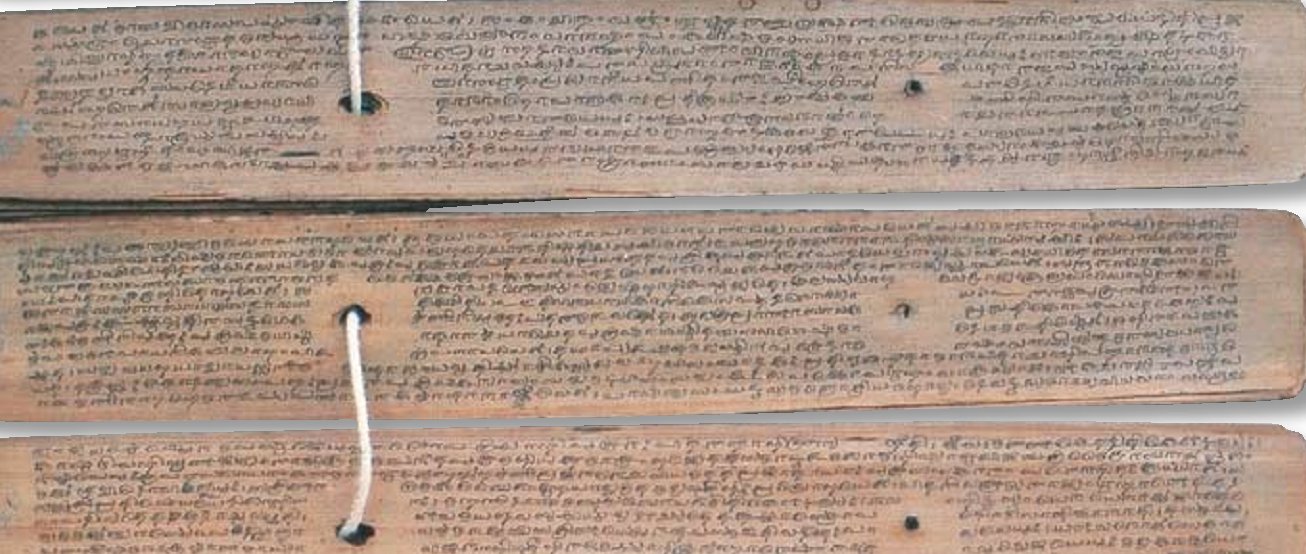
The Arthaśāstra, for instance, transmits a model of urban organisation that does not depend on, and cannot be matched to, any identifiable built example. Street hierarchies, spatial distributions, administrative responsibilities, and procedural sequences survive as textual knowledge even where no corresponding material object can be pointed to.3
Here knowledge survives without the object.
Elsewhere, the object survives without the knowledge that once made it fully operative.
A practice may survive after the buildings through which it was once expressed have vanished. A text may survive without the institutional world that once enacted it. A craft lineage may persist while the building type for which it was once responsible changes substantially.
Architecture and architectural knowledge overlap.
They are not identical.
This also requires an ethical distinction.
Recovering the relationships through which an architecture once operated does not require endorsing them. A threshold regulating who could enter might encode ritual order; it might also enforce caste exclusion, gender restriction, or unequal access. The weakening of such an order cannot automatically be described as architectural loss. Some forms of operation were deliberately resisted, altered, or abolished by those they constrained.
What matters analytically is that the governing relation remains intelligible enough to examine. We need to be able to ask what the threshold regulated, whose conduct it organised, what authority sustained that regulation, and how that authority changed.
Loss of intelligibility is not the same as loss of operation.
The first diminishes our ability to understand a system.
The second may sometimes be emancipation.
The archaeological object is therefore not simply a damaged version of the living architecture from which it emerged. Nor is it the enemy of recovery. Its evidentiary capacity can be extraordinary. Material remains can reveal dimensions memory has forgotten, alterations oral accounts have compressed, and relationships contemporary practice no longer recognises.
The problem begins when evidence is mistaken for the knowledge itself.
A photograph is not the activity photographed.
A plan is not the rule that generated the plan.
A monument is not the transmission system that maintained it.
An inscription is not the institution whose operation it records.
A surviving form is not proof of a surviving intelligence.
Objects are easier to stabilise than the relationships surrounding them.
A monument has a location. A drawing has dimensions. A photograph has a frame. A catalogue has a category. A building can be assigned a date, a style, a patron, a material, a type.
Use has duration.
Maintenance has recurrence.
Transmission has generations.
Judgement has context.
These are harder to isolate because they do not exist as singular things.
They exist as relationships.
This is where the directly observable and relational dimensions of architecture diverge—the distinction I describe in greater detail in my forthcoming book as the sensible and non-sensible.
The sensible world is not superficial or false. It contains the material evidence through which architectural intelligence can be approached. But it is incomplete when treated as the whole of architecture.
The non-sensible is not mystical or immaterial. It is simply that which cannot be represented adequately as a bounded object because its operation exists in relationships.
A courtyard is sensible.
The rules through which its proportions may have been adjusted to climate and use are not directly sensible.
A threshold is sensible.
The sequence of access, visibility, permission, and withdrawal that it coordinates unfolds through time.
A tool is sensible.
The competence required to use it appropriately resides partly in practice.
A maintenance repair is sensible.
The obligation determining who performs it, when it occurs, and what counts as adequate repair belongs to a wider governing order.
Reading the archaeological object therefore changes the question.
Not only:
What is this building?
but:
What relationships could account for this building functioning as it did, and what evidence allows one account to be preferred over another?
The qualification matters.
Form does not prove the rule that generated it. Many possible explanations can account for the same configuration. A courtyard that moderates temperature does not, by itself, prove that its dimensions were consciously generated by a thermal rule. A repeated proportion may indicate transmitted knowledge; it may also result from material limitation, imitation, regulation, coincidence, or later adaptation.
Inference becomes stronger when different kinds of evidence converge.
Dimensions may suggest possible rules. Measured environmental performance can test their consequences. Texts can document prescriptions. Ethnography can reveal continuing practices. Alterations can show how a system responded when conditions changed. Recurrence across related buildings can indicate that an arrangement was not singular. Craft transmission can establish that knowledge capable of producing such variation actually circulated.
No individual fragment is sufficient.
Recovery begins when fragments are placed into relation.
This problem is not exclusively colonial. Colonial documentation offers an unusually clear historical demonstration because its representational institutions made the asymmetry visible, but any regime that privileges what can be stabilised over what must be enacted can reproduce some version of it.
A modern architectural drawing can do this.
A conservation document can do this.
A textbook can do this.
An architectural photograph can do this.
A digital image can do this.
The technologies differ. So do their purposes and consequences.
The epistemic movement remains recognisable.
Operation becomes representation. Representation becomes the object through which architecture is known. The conditions that generated the operation begin to recede from view.
Recovery must therefore begin with relationships rather than with a desire to reconstruct a lost object.
Where did a spatial arrangement come from?
How was it adjusted?
When did particular configurations become appropriate?
How did people learn to use them?
Who maintained them?
How was competence transmitted?
What happened when the rules stopped working?
Who was permitted to change them?
Which adaptations remained pragmatic, and which acquired normative force?
Which relations deserve continuity, and which were rightly challenged?
The archaeological object does not answer these questions.
It gives us somewhere to begin asking them.
Its dimensions, surfaces, repairs, alterations, inscriptions, environmental performance, and surviving associations become fragments from which a wider architectural intelligence may be reconstructed.
Recovery therefore does not mean restoring a building to an imagined original condition.
A reconstructed wall does not automatically reconstruct the knowledge that produced it.
A restored courtyard does not restore the rhythms that once activated it.
A reconstructed temple does not automatically restore the system through which its proportions were learned.
At the same time, reconstruction is not necessarily opposed to transmission. When repair or rebuilding remains embedded within an active lineage of practitioners, the act of reconstruction may itself become a vehicle through which knowledge is rehearsed and transmitted. The distinction therefore lies less between original and reconstructed fabric than between reconstruction as reproduction of form and reconstruction as continuation of operative knowledge.
Material restoration and intellectual recovery remain different tasks.
The first stabilises or renews the evidence.
The second asks what the evidence can still disclose.
The distinction protects recovery from becoming revival.
The objective is not to make the past whole.
The objective is to make what remains legible.
The archaeological object is not the end of architectural knowledge. It is the residue from which architectural knowledge may begin again.
This changes what we mean by loss.
Loss is not simply the disappearance of buildings or the destruction of texts. It occurs when relationships that once connected material form, use, transmission, judgement, and governance become difficult to reconstruct.
A building may remain.
A text may remain.
A craft tradition may remain.
Yet the relations between them may have become obscure.
Recovery must therefore be plural. Some fragments are spatial. Others are temporal. Others concern transmission. Some survive in texts, others in buildings, bodies, practices, institutions, measurements, or memories. Their evidentiary status differs. Their reliability differs. Their distance from the conditions being reconstructed differs.
Analysis cannot treat them as equivalent.
Nor can it demand that a complete system survive before investigation begins.
Description tells us what remains.
Analysis asks what relationships might account for it.
The movement is from residue towards relation.
From object towards operation.
From appearance towards organisation.
From preservation towards intelligibility.
This does not diminish the archaeological record.
It makes its role more precise.
The archive can preserve what time would otherwise erase. Its measurements remain valuable. Its photographs remain indispensable. Its classifications are themselves evidence of the intellectual systems that produced them.
But the archive must also become an object of analysis.
It records architecture.
It also records what its methods were capable of recognising as architecture.
Colonial documentation did not simply tell later generations what Indian architecture looked like. It helped establish the terms through which Indian architecture subsequently became knowable. Monumental form acquired disproportionate historical authority. Authored design became easier to recognise than distributed competence. Static representation became easier to preserve than duration. Buildings could remain visible while the systems that sustained, adapted, and transmitted them became progressively harder to reconstruct.
This was not a single conversion from life into archaeology.
It was the increasing dominance of one epistemic relation over others.
A building might remain in use and become evidence.
Evidence might enter an archive.
The archive might establish a history.
History might produce precedent.
Precedent might circulate as image.
At every movement, something survives.
Something else becomes less accessible.
The gap is not simply between past and present.
It lies between what survives and what the surviving evidence is still capable of telling us.
The building remains.
The question is what remains with it.
I use archaeological object here to describe a relationship to a building, not contemporary archaeology as a discipline. A building enters this condition when its material remains are approached as evidence from which earlier relations are reconstructed. This can coexist with continued occupation, worship, maintenance, or adaptation. Alois Riegl’s distinction between overlapping values attached to monuments provides an important precedent for this non-exclusive understanding; in India, Tapati Guha-Thakurta traces how colonial and postcolonial institutions variously constituted material remains as archaeological antiquities, architectural relics, and art objects. See Alois Riegl, “The Modern Cult of Monuments: Its Character and Its Origin” (1903), trans. Kurt W. Forster and Diane Ghirardo, Oppositions 25 (1982): 21–51; Tapati Guha-Thakurta, Monuments, Objects, Histories: Institutions of Art in Colonial and Post-Colonial India (New York: Columbia University Press, 2004). ↩︎
Brian Ford and Mark Hewitt, “Cooling Without Air Conditioning: Lessons from India,” Architectural Research Quarterly 1, no. 4 (1996): 60–69. Measurements at Adalaj on 1 April 1995 recorded 35°C outside, falling through successive measured positions to 23°C at the lowest measured position. A 48-hour continuous record there showed a mean of 23°C with only 0.4°C variation. ↩︎
The Arthaśāstra transmits urban organisation largely through procedural prescription rather than architectural drawing: dimensional hierarchies, spatial distributions, administrative responsibilities, and temporal protocols specify how an urban system is to operate. See R. P. Kangle, The Kauṭilīya Arthaśāstra, Part II: An English Translation with Critical and Explanatory Notes (Bombay: University of Bombay, 1963), and Part III: A Study (Bombay: University of Bombay, 1965); Patrick Olivelle, King, Governance, and Law in Ancient India: Kauṭilya’s Arthaśāstra (Oxford University Press, 2013). ↩︎
